Six weeks before its first class, Chamberlain University's new Sandy campus is accepting applications for a nursing program that puts students through childbirth and cardiac arrest simulations before they ever see a real patient.
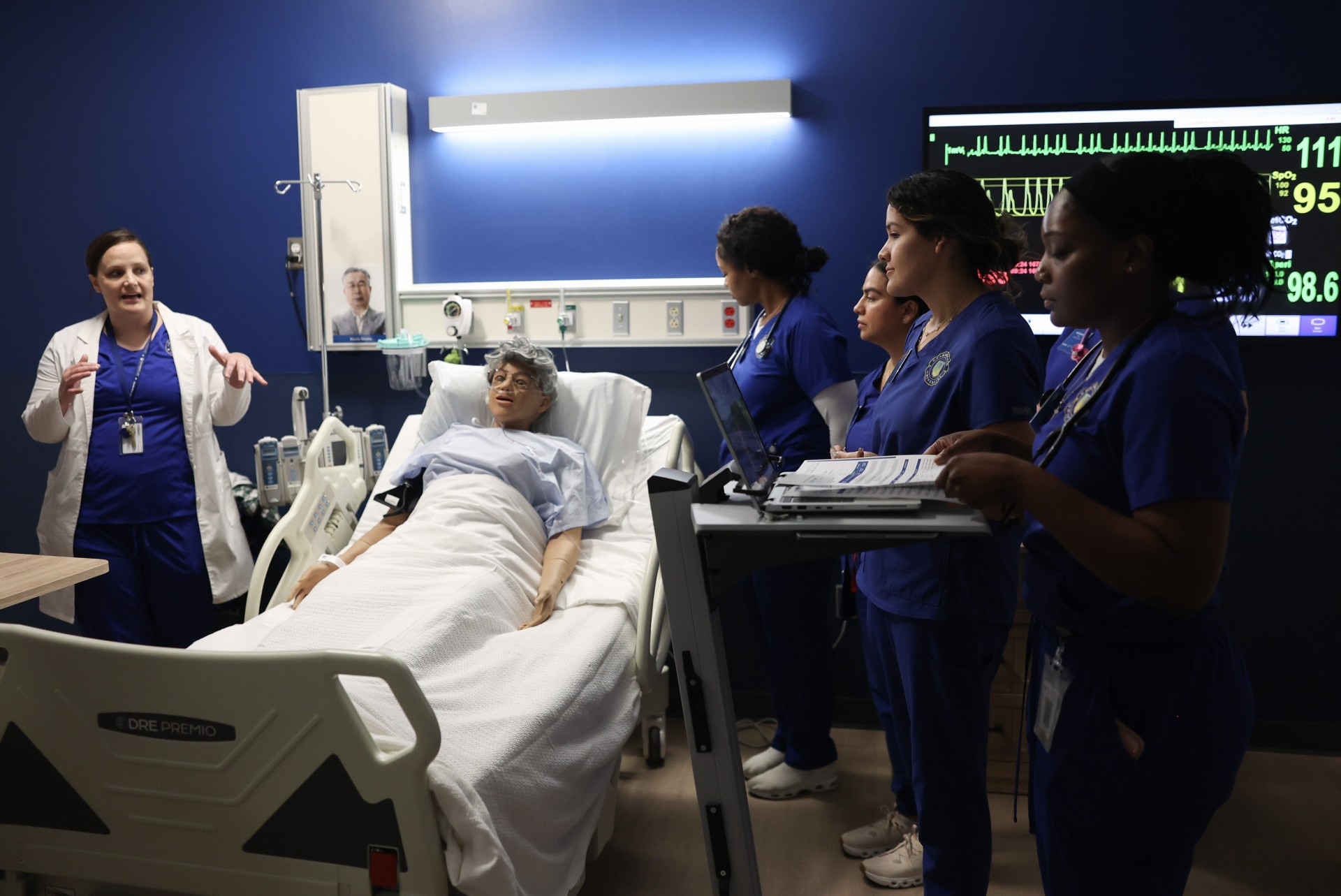
That training will happen inside the school's SIMCARE CENTER, a simulation lab designed to mirror a working hospital floor. Chamberlain's Salt Lake City campus, at 9490 S. 300 W. in Sandy, begins its first pre-licensure Bachelor of Science in Nursing classes on Monday, Oct. 26. It is the university's 26th location and its first in Utah.
Chamberlain President Amelia Manning said the campus targets Utahns already drawn to the profession. "There are people in Utah right now who want to become nurses … that's what Chamberlain is here to offer, and we couldn't be more excited to open our doors in Salt Lake City," Manning said in the university's July 20 announcement.
The patient simulators are not mannequins propped on a table. According to Chamberlain's program description, they display vital signs, voice discomfort and can blink, sweat and bleed. Instructors control the simulators' physical and verbal responses remotely from behind the scenes.
Students lead the care. They will react in real time to scenarios including childbirth, seizures and cardiac arrest, making the clinical decisions themselves rather than observing from the side.
The philosophy behind the model comes down to learning from mistakes in a controlled setting. Tracy Heberlig, SIMCARE CENTER manager at Chamberlain's Charlotte campus, has described the system-wide approach: "In the SIMCARE CENTER, our students have a safe place to learn … we call that 'falling forward.'" Heberlig has said active learning helps students understand their clinical education rather than memorize it.
The simulation center's labs will replicate hospital settings down to privacy curtains, scrub sinks, hospital beds and patient monitoring equipment. A resource center on site will also help students build complex skills such as medication calculation. After each session, faculty will debrief students on what worked and what did not.
Trevor Scott, executive campus director for Chamberlain's Salt Lake City location, said the goal is graduates who can perform from day one. "We're committed to making sure every graduate is practice-ready, community-rooted, and prepared for what healthcare looks like today and tomorrow," Scott said.
The simulation training is a first step, not a substitute for bedside experience. After completing sim lab rotations, students will move into direct patient care clinicals at health system partners across the region. The university has not named specific partner hospitals.
Chamberlain's three-year BSN program combines in-person, online and blended coursework with lab, simulation and clinical hours. The program is accredited by the Commission on Collegiate Nursing Education, and the university holds accreditation from the Higher Learning Commission. The Sandy campus also has state-level approvals through the Utah Board of Nursing and the Utah Department of Commerce.
The campus sits near the Historic Sandy and Sandy Expo TRAX Blue Line stations, with access to I-15, a combination that could ease commutes for students traveling from across the Salt Lake Valley or from neighboring Draper. Applications are open at chamberlain.edu/saltlakecity. Classes begin Oct. 26.


.webp)