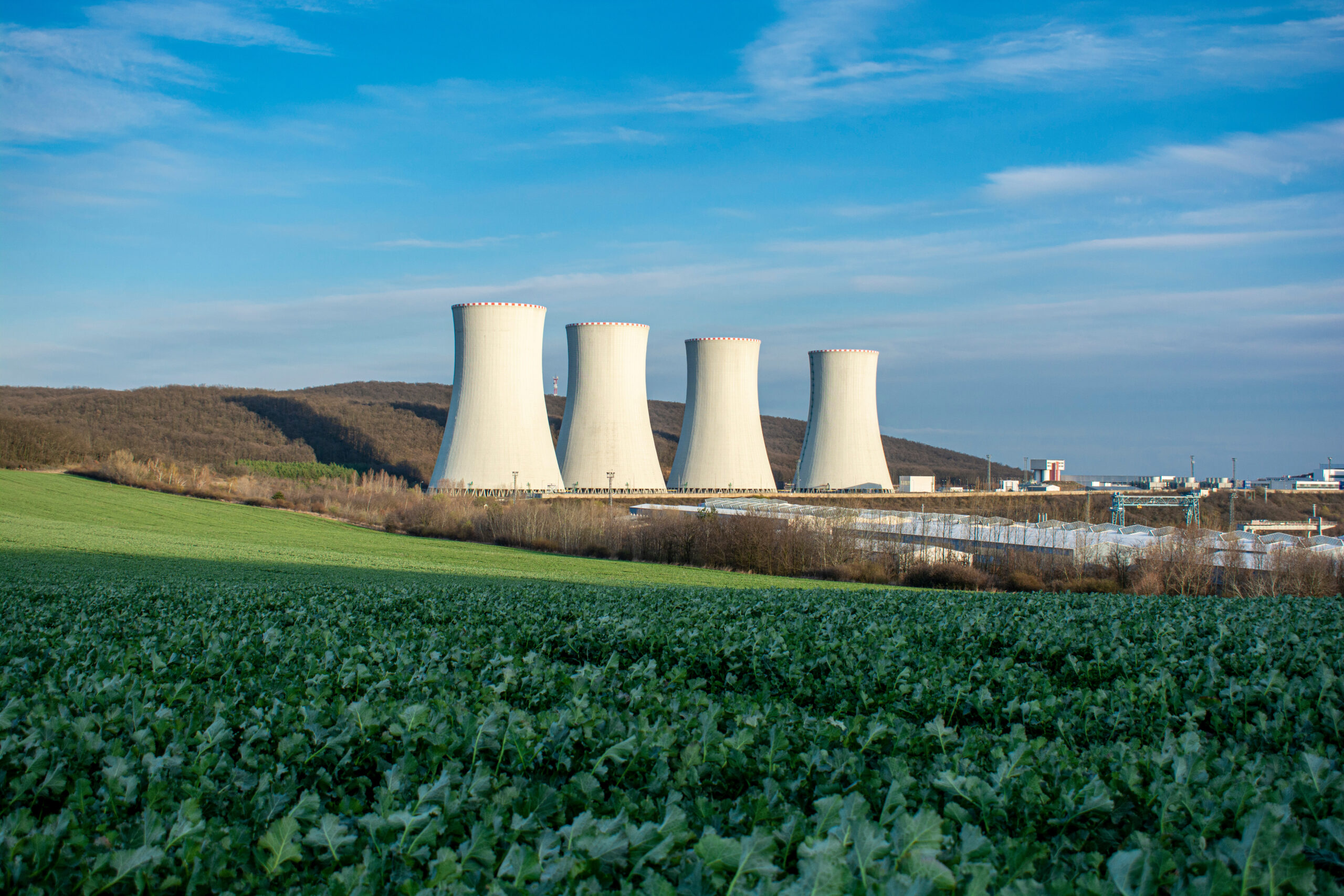
Utah is one of five states in the running to host a massive federal nuclear energy campus that could bring up to $50 billion in capital investment and 25,000 jobs, the U.S. Department of Energy announced Tuesday, July 28.
The selection puts Utah in competition with Idaho, Tennessee, Oklahoma, and Louisiana for a Nuclear Lifecycle Innovation Campus, a facility that would rebuild the nation's domestic nuclear fuel supply chain. The DOE reviewed 28 applications from 26 states before narrowing the field.
For Draper-area residents and Silicon Slopes employers, the announcement lands at a moment when data center construction along the Point of the Mountain corridor is straining the state's power grid. As we reported July 24, more than 2,600 megawatts of new data center capacity was under construction statewide as of this month. The DOE has said nuclear campuses could serve as testbeds for next-generation reactors and energy-intensive digital infrastructure, including AI data centers.
Gov. Spencer Cox tied the bid to Operation Gigawatt, his initiative to double Utah's power-generation capacity over the next decade. "Through Operation Gigawatt, Utah is developing the entire nuclear lifecycle, from fuel production to advanced reactor deployment," Cox said in a statement Tuesday.
The proposed site is in Tooele County's West Desert, not along the Wasatch Front. But Emy Lesofski, director of Utah's Office of Energy Development, said planning ahead is critical given the campus's potential magnitude, which she compared to Hill Air Force Base. She said the state's goal is to "reshore the fuel cycle" domestically and that safety remains the top priority.
The numbers carry a caveat. The $50 billion investment figure, $10 billion in projected tax revenue, and 25,000 jobs are DOE projections for what a campus could generate nationally. They are not commitments specific to Utah.
What happens next
Energy Secretary Chris Wright signed non-binding memorandums of understanding with all five states on Friday, July 24. The DOE plans to narrow the field to three states by the end of 2026, according to the Oklahoma Department of Commerce. A host agreement deadline of Sept. 30 has been set, according to the Deseret News.
Utah's Legislature laid groundwork earlier this year, passing HB78 to establish a state nuclear energy regulatory office and SB135 to authorize the Office of Energy Development to pursue a campus.
Not everyone is celebrating. HEAL Utah executive director Lexi Tuddenham said the selection "really feels like losing," citing concerns that the campus could bring permanent high-level radioactive waste storage to the state. HEAL Utah plans to hold a town hall for Tooele County residents on Tuesday, Aug. 4, at the Tooele City Public Library.
U.S. Sen. John Curtis called the selection "an incredible opportunity to strengthen American energy dominance" and create high-paying jobs in Utah.
Meanwhile, the nuclear-tech connection to Silicon Slopes is already taking shape. Utah-based startup Valar Atomics partnered with Nvidia on July 1 to demonstrate a small nuclear microreactor powering a data center in Utah, a first for the technology.
The DOE envisions initial campus facilities coming online as early as 2027, with preference given to states proposing faster timelines.


.webp)