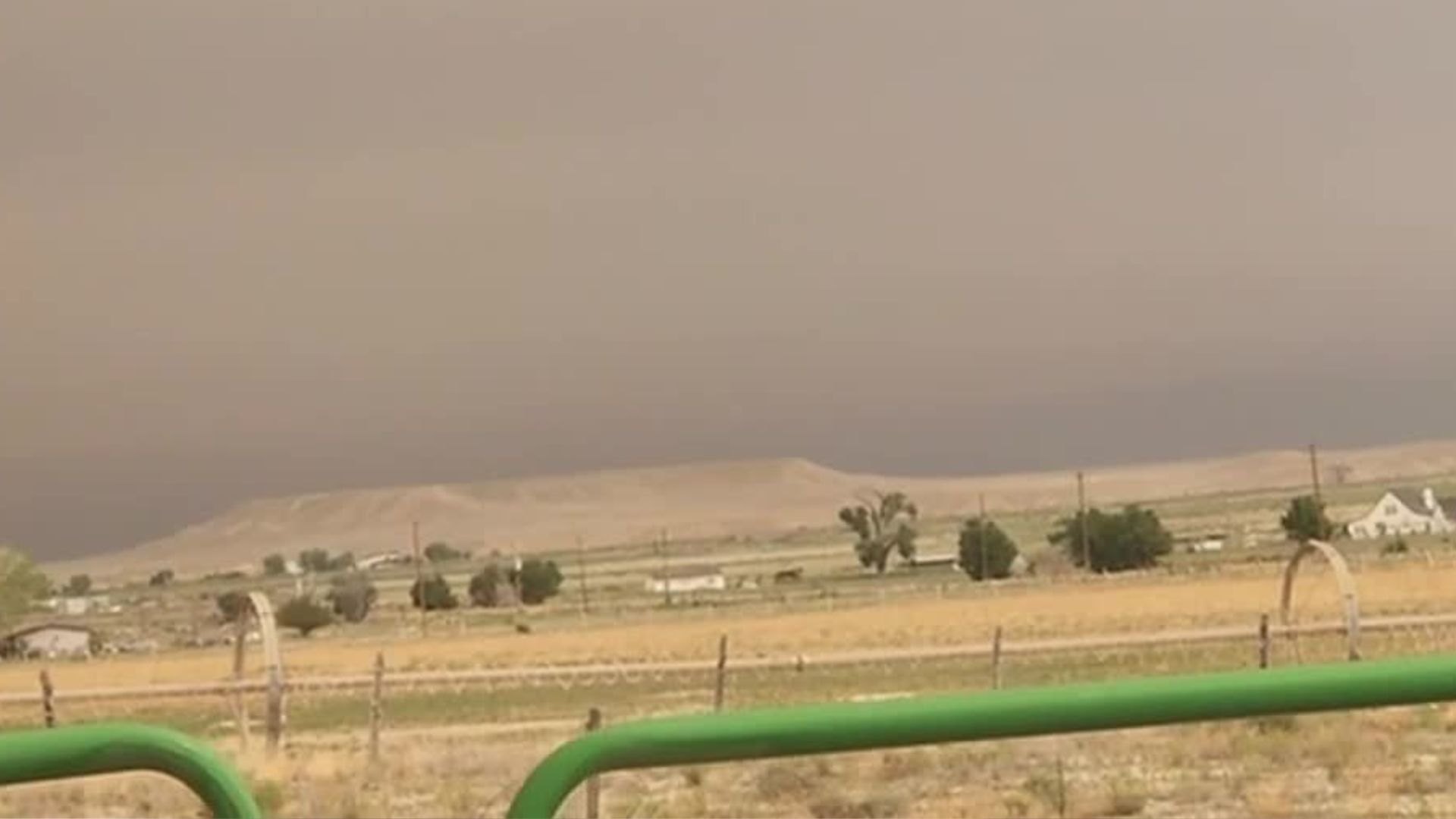
Thick wildfire smoke settled over Draper on Sunday, August 2, dropping ash and cutting visibility as four major fires burned across Utah in triple-digit heat.
The haze comes from the Widemouth 2 Fire in Millard County, which exploded to 36,500 acres Sunday afternoon after measuring about 6,000 acres Saturday. The Johnson Canyon Fire near Tremonton grew to 6,273 acres and was 10% contained. The Black Canyon Fire near Ephraim and the Canyon Road Fire near Logan are also burning, according to Fox 13.
None of the four fires are near Draper, but smoke drifting into the Salt Lake Valley carries PM2.5, fine particulate matter that poses serious health risks for children, older adults, and anyone with asthma or heart disease.
"Salt Lake is often known as the crossroads of the West. Unfortunately, we're the crossroads of the smoky West right now," John Lin, a professor of atmospheric sciences at the University of Utah and scientific director of the Wilkes Center for Climate Science and Policy, told Fox 13 on Sunday, August 2.
Lin said the most common health impacts from wildfire smoke include respiratory illness, breathing problems, and cardiovascular issues.
Heat compounds the danger
The smoke arrived during an Extreme Heat Warning for the Salt Lake Valley, with temperatures reaching 103–106°F over the weekend. The National Weather Service forecast for Monday, August 3, calls for patchy smoke with highs in the mid-90s.
Bryce Bird, director of the Utah Department of Environmental Quality's Air Quality Division, warned in a July 13 ABC4 interview about the compounding danger of extreme heat and smoke. He said the body faces "an additional burden from the heat" on top of air pollution, which "can lead to some of those worse outcomes." Bird recommended moving indoors, where building filtration reduces particle exposure, and wearing a well-fitting N-95 mask outdoors.
Draper's wildland-urban interface risk
Draper spans more than 30 square miles and includes over 4,500 acres of open space, placing many neighborhoods in or near the Wildland-Urban Interface. Approximately 60,000 structures statewide fall within Utah's high-risk WUI boundary, including locations in Draper. The Draper City Fire Department held a public presentation on Wednesday, April 15, about the state's WUI map and how it affects residents in higher-risk areas.
As we reported July 25, Utah remains at the highest national wildfire alert level. July 2026 tied the second-warmest July on record for Salt Lake City, with 11 triple-digit days.
What residents should do
Health experts recommend limiting time outdoors when smoke is heavy. Residents can monitor conditions at AirNow.gov and the Utah Division of Air Quality website. Draper residents can sign up for emergency alerts through Notify Draper at draperutah.gov/notify.
The Draper Fire Department has not issued a public statement specific to this weekend's smoke event. FEMA has authorized federal funds to help fight the Widemouth 2 Fire.



.webp)